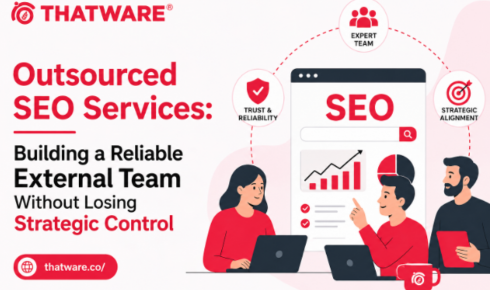
The decision to outsource SEO usually comes from one of two places. Either the in-house team doesn’t have the bandwidth to do the work that needs to be done, or they don’t have the expertise to do it well. Sometimes both. The decision to outsource is typically straightforward once those gaps are acknowledged.
The harder decision is how to outsource without losing the strategic visibility and control that good SEO requires from the business side. Bad outsourcing arrangements create a black box: you pay a retainer, receive monthly reports, and hope that the work being done invisibly somewhere actually aligns with your business objectives. This arrangement fails more often than it succeeds, not because the agency is doing bad work but because the relationship structure doesn’t give them enough context to do genuinely good work.
Building an outsourced SEO relationship that avoids this failure mode requires being deliberate about structure, communication, and accountability from the beginning.
The Strategic Control Problem
The core issue with many outsourced SEO arrangements is an asymmetry between who holds strategic knowledge. The business understands its customers, its competitive landscape, its product roadmap, its business objectives. The SEO agency understands search, content optimization, and technical SEO. Good SEO strategy requires both kinds of knowledge working together.
When the outsourcing structure treats strategy as the agency’s responsibility and the client as a passive recipient of deliverables, the agency is working with incomplete context. They know what keywords are relevant in the abstract but not which ones map to the highest-value customer segments. They know how to build content authority but not which topic areas are about to become more commercially important because of a product launch.
The businesses that get the most from outsourced SEO treat the agency as an execution partner with genuine strategic input, not a vendor that delivers content and reports. This requires investing time in context-sharing that most clients underestimate.
Outsourced seo services arrangements that work well have regular strategic alignment calls where business priorities are shared, not just monthly reporting calls where the agency presents performance data.
What to Keep In-House vs What to Outsource
Not everything should be outsourced, even when most of the execution is external. The decisions about what to keep in-house are as important as the decision to outsource at all.
Strategic direction should stay in-house or at minimum be jointly owned. The business-side stakeholder needs to understand and be able to evaluate the strategic logic behind the agency’s keyword targeting, content prioritization, and competitive approach. If you can’t evaluate the strategy, you can’t identify when it’s wrong.
Brand voice and positioning oversight should stay in-house. Content produced externally needs to go through a review process that ensures it represents the brand accurately and appropriately. Agencies produce content to brief, and the quality of the brief determines a lot of the quality of the output.
Performance interpretation should be shared. The agency can produce reports, but the business-side team should understand what the numbers mean and whether the program is actually moving business metrics.
Execution, which includes actual content production, technical implementation, link outreach, and monitoring, is where outsourcing produces the most value and the least risk. These are the activities where the efficiency argument for outsourcing is strongest.
The Brief Quality Problem
One of the most consistent causes of disappointing outsourced SEO output is poor briefing. The agency can produce technically competent content to an inadequate brief. The result is content that ranks reasonably well but doesn’t connect to what the business actually needs it to do.
Good content briefs for outsourced teams include the target audience with enough specificity to calibrate the writing appropriately, the searcher intent being addressed and the specific question being answered, the tone and voice guidelines with examples, the key claims and differentiators that the business wants to emphasize, and the conversion goal, what action should the reader take after engaging with this content.
Agencies that receive detailed briefs produce substantially better content than agencies working from keyword-only briefs. Investing in brief quality is one of the highest-ROI improvements most outsourced SEO programs can make.
Accountability Structures That Actually Work
White label seo services and standard outsourced arrangements both benefit from accountability structures that go beyond vanity metrics.
Define success metrics before the engagement begins, in business terms. Not just keyword rankings and organic sessions, but the downstream business impact those metrics are supposed to produce. Organic leads generated, organic-assisted revenue, customer acquisition cost through organic channel. These are harder to measure but they’re what the investment is actually supposed to achieve.
Build in quarterly strategy reviews where the program’s direction is evaluated and adjusted, not just performance monitoring calls where the agency reports on what happened. Strategy reviews should include an honest assessment of whether the current approach is working and what should change.
Establish clear ownership of deliverables with quality standards. If content doesn’t meet brand and quality standards, the process for revision should be clear and the expectation that revision is part of the service should be established upfront.
The Transition Risk
One aspect of outsourced SEO that often gets insufficient attention is the transition risk if the relationship ends. Content produced by an external team lives on your site. Keyword research and strategic documents developed during the engagement contain valuable institutional knowledge. Access to tools and accounts configured during the engagement needs to transfer.
Contracts should explicitly address data portability, content ownership, and knowledge transfer. The most difficult outsourcing relationship endings are those where the business discovers that important data or access lives with the agency rather than with them.
Maintaining your own access to all key tools, analytics, search console, and keyword tracking throughout the engagement ensures that if the relationship ends, you retain the ability to understand your own program and transition to a new partner without starting from scratch.
Outsourcing SEO well is a management skill as much as a procurement decision. The agencies that produce the best results for outsourced clients are usually the ones who work with clients who have figured out how to be good partners for an external team.